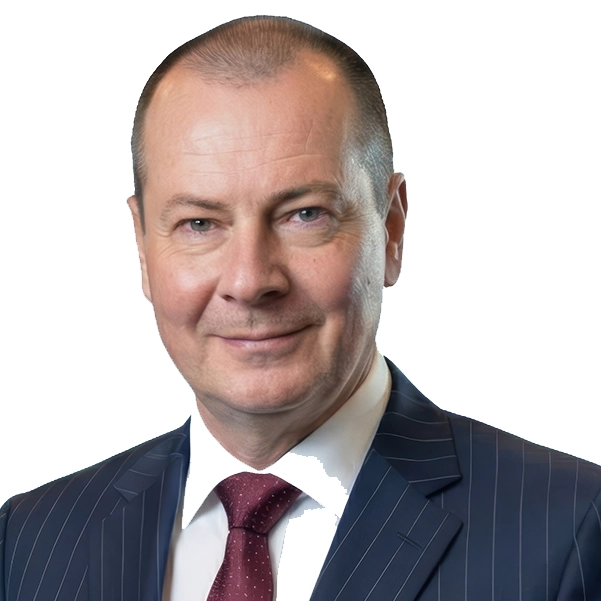
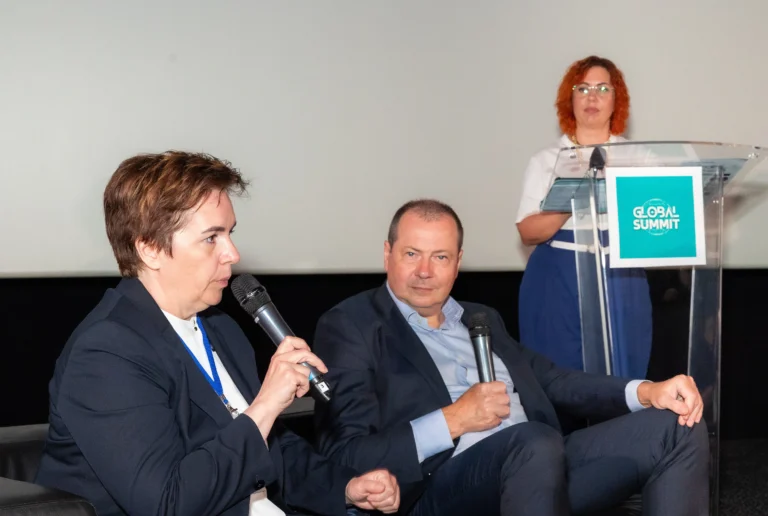
In May 2025, at the European Business Summit in Alicante, Finetic Consulting founder Vladislav Panchenko answered questions from entrepreneurs and investors.
The key points: you do not just find an investor, you convince them with the project’s structure; project preparation and “packaging” are different services; a founder’s first step is to check whether the project is viable at all, and only then prepare documents.
At the end of May 2025 the European Business Summit took place in Alicante. According to the organisers, it brought together more than 500 participants from 17 countries.
The main themes were investment strategies, startup development, real estate, marketing and PR.
Vladislav Panchenko took part in one of the central panel discussions and answered practical questions from entrepreneurs and investors.
Below are his answers to the most relevant ones, in the first person, as they were given during the discussion.
1. What is an investment strategy for a founder?
Most founders believe their main problem is finding an investor.
In reality it is not finding but convincing — and not with words, but with the project’s structure and a position on the key deal terms.
An investor does not need a monologue about dreams. They need someone to discuss money, risk and control with.
An investment strategy is not a declaration but a working tool — a way to be heard. It answers the questions without which no deal is possible:
- The founder’s financial participation. How much they have put in, how much they are ready to put in and in what form. Without skin in the game there are no negotiations. More in Founder skin in the game.
- The minimum stake the founder wants to keep, and why that structure is fair. A stake is not about greed but about matching contribution and risk. If the investor holds 70% and carries most of the risk, there are no questions. If 30%, justify it so that you would believe it in the investor’s place.
- Control and rights. How decisions are made: who signs, who approves, who can block. The investor wants to understand the limits of control.
- The type of investor and their interest. A fund, a strategic investor, an angel, a public body — and why the project needs that particular type. Unclear goals mean wasted time.
- The instrument. Equity, a SAFE, a convertible loan, a straight loan, a hybrid. The form matters as much as the substance: each instrument has its own logic of control, exit and returns. How they work in Spain: How to structure startup investment in Spain.
- Team and non-financial resources. Is there anyone besides the founder who can deliver the project? A single founder means high dependency and high risk.
- The deal economics for the investor. What return and what risks; what is offered — dividends, growth in the stake’s value, a strategic exit. Where is the upside?
- The exit plan. How, when and to whom the investor can sell: an IPO, a sale of the company, a buy-back — or no coherent scenario at all?
- Participation in later rounds. Will the founder keep investing or freeze their stake? The investor needs to know whether they are the only source of capital.
An investment strategy is a way not to sell yourself but to negotiate. It is the business language of professionals, and it should be built professionally too.
2. Why can prices for investment preparation differ 5–10 times?
Because most of the market is packaging, not consulting. Clients want to pay less — and get what is cheaper.
Packaging is a template deck, a nice landing page and a standard “business plan”.
The effort is minimal, the price is minimal, which is why it is the most popular service.
Consulting means:
- a financial model with sensitivity analysis and unit economics;
- the legal and corporate structure of the project;
- an investment strategy and deal logic;
- market, exit, risks, scenarios.
It is not graphics or text but the architecture of an investment product that can survive negotiations and due diligence.
For us this work takes at least 120 hours, which is why it costs considerably more.
Preparation at M&A or institutional fundraising level takes hundreds of hours from top specialists.
We work on projects to international standards, most often the UNIDO methodology: a structural, financial and risk model at the level professional investors expect.
Do not confuse packaging with consulting. You are paying not for text but for an investment product you can take to a deal.
3. Why don’t advisers work for a percentage of the money raised?
An analogy. A developer building a residential complex hires a contractor to build it — to the design, schedule and budget.
They do not ask the contractor to sell the flats or offer payment only after sales.
Investment consulting is the same. We are contractors. Our job is to build the investment product — strategy, financial model, deal logic and structure — not to sell it.
Besides, working for a percentage of the amount raised amounts to investment intermediation, which in many countries requires a licence.
And finally, we do not control the founder, the investor, their interaction or the market. We are responsible for preparing the project, not for the behaviour of third parties.
That is why serious advisers charge per project.
At Finetic Consulting we sometimes use a success fee, but only in a hybrid model where a base fee covers the preparation and a managed process.
4. Why are there so many offers to “package a startup” but so few cases of raising investment?
There are two reasons.
First, most “packagers” do not touch the essentials: finance, strategy, deal structure. They make presentations, not investment products.
That is marketing, not investment architecture.
An investor does not need make-up; they look at the cardiogram — capital structure, risks, monetisation model, exit scenarios — and get pretty slides and general words instead.
Second, most projects are not ready for a dialogue with an investor. Founders overestimate their stage, team and market and fail the basic test of realism and competitiveness.
Not every project is investable, and not every founder is a negotiator.
At Finetic Consulting we do not package; we design — we build a product that survives negotiations and meets professional investors’ expectations.
5. What are a founder’s first steps?
The first stage is not to inspire the team or write a deck, but to find out whether the project has a right to exist in its current form.
- Test the idea against the market — not through friends and Telegram but through numbers: funnel, target audience, behavioural signals, ability to pay. See How to find a business niche and test it.
- Work out the unit economics. Without them you cannot assess scalability. If the model loses money as it grows, it is not a business but a self-destruct scheme. See Startup unit economics.
- Build the team: who is in the core, who is outsourced, who is temporary. A startup without a team is not a project but a one-man show. See Can you raise investment before building a team?
- Make a financial plan for at least 18 months: monthly burn, capital expenditure, break-even point, the funding gap. The plan should show when and why the project needs money and what happens if it does not come.
- Formulate the investment strategy: how much is needed, for what, in what form, what stake the founder is ready to give and how they justify the ownership structure.
- Only then put the documents together: financial model, deck, teaser. They are tools, not the substance, and work only when the project is investment-ready.
If steps 1–5 are not done, packaging is useless. You need not a designer but a finance director — or a partner who can structure the project so that it can be negotiated.
How to go through this step by step: How to prepare a project for investment.
Frequently asked questions
What is a founder’s investment strategy?
Answers to the questions without which a deal is impossible: how much the founder has put in, what stake they want to keep, how control and rights work, which investor type and instrument are needed, who is on the team, the deal economics, how the investor will exit and whether the founder will take part in later rounds.
How is investment preparation different from “packaging”?
Packaging is a template deck, a landing page and a standard business plan. Preparation is a financial model with unit economics, company and deal structure, an investment strategy, risks and exit scenarios — a product that survives negotiations and due diligence.
Why don’t advisers work only for a percentage?
Preparing a project is a contractor’s job, while the outcome of a deal depends on the founder, the investor and the market. Working only for a percentage of the money raised is intermediation, which in many countries requires a licence. A hybrid model is possible: a base fee plus a success fee.
Key points from the summit answers
- You do not just find an investor — you convince them with the project’s structure and your position on deal terms.
- An investment strategy answers nine questions, from the founder’s contribution to the exit plan.
- Packaging and consulting are different products, hence the 5–10x price difference.
- The first step is to check the project’s right to exist; documents come last.